

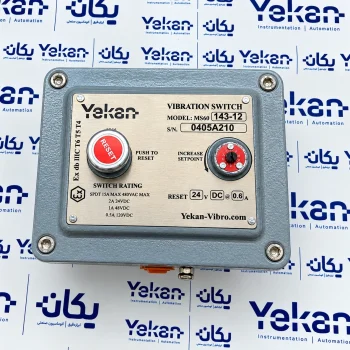
Mechanical Vibration Switch
A mechanical vibration switch provides direct protection against excessive machine vibration. It can detect abnormal vibration and trigger an alarm or shutdown through the machine’s control circuit without requiring a separate vibration monitoring system. For an industrial example, see the Robertshaw VibraSwitch 366.
A mechanical vibration switch typically uses a mechanism that responds to motion and acceleration. When vibration exceeds the setpoint, the mechanism trips and changes the state of the output contacts. The control circuit can use that change to trigger an alarm or shut down the machine.
Mechanical vibration switches are used on fans, pumps, electric motors, compressors, cooling towers, material-handling equipment, and other rotating machinery. A sudden rise in vibration can indicate imbalance, looseness, mechanical damage, or a change in operating conditions.
A mechanical vibration switch provides basic machine protection without a separate signal processor or monitoring system. For applications that require more precise measurements, data logging, or vibration analysis, consider an electronic vibration switch or a vibration monitoring system.
When selecting a mechanical vibration switch, check the adjustment range, sensitivity, mounting orientation, contact configuration, environmental conditions, operating temperature, and machine type. Choose a mounting location that transfers the machine’s vibration to the switch.
When replacing a mechanical vibration switch, verify the part number, contact configuration, operating range, and reset method. Check the setpoint and mounting requirements, since they can vary by model.
Browse mechanical vibration switches by brand, model, and part number. Select a switch based on the type of machine, the required level of protection, and the operating environment. For vibration measurement, monitoring, and machinery protection equipment, browse products from Yekan.